

Maths
Intent
At Walmley Junior School, Mathematics is a core strength, with consistently strong outcomes over time. We view Mathematics as a coherent journey of exploration, explanation, practice and application. Our intent is that all pupils develop a deep, conceptual understanding of mathematical ideas, enabling them to build knowledge progressively and apply it confidently across a range of contexts.
We follow the White Rose Maths curriculum, which is fully aligned to the National Curriculum and supports a mastery approach. This ensures that learning is carefully sequenced, key concepts are revisited, and pupils are supported to move from concrete understanding to pictorial and abstract representations.
Our intention is to develop confident, competent and resilient mathematicians who enjoy the subject and approach challenges positively. We believe that enjoyment and success in Mathematics go hand in hand. Lessons promote curiosity, discussion and collaboration, with a strong emphasis on mathematical language, reasoning and justification.
Fluency in number and calculation underpins all areas of Mathematics. Secure arithmetic skills give pupils the confidence and tools needed to reason, solve problems and explain their thinking clearly. As a KS2 school, we build on the strong foundations developed in earlier years and work closely with our feeder infant school to ensure continuity and progression.
We foster a learning culture where pupils are encouraged to take risks, persevere and learn from mistakes. Resilience and a growth mindset are central to our school ethos. By the end of Key Stage 2, pupils leave Walmley Junior School well prepared for the demands of secondary Mathematics and for using Mathematics in later life.
Implementation
Mathematics at Walmley Junior School is taught through the White Rose Maths scheme, which provides a clear progression of small steps, ensuring depth of understanding and consistency across the school. Medium-term planning is carefully sequenced and linked directly to the National Curriculum, while remaining responsive to the needs of each cohort. Teachers use their professional judgement to adapt lessons, revisit prior learning where necessary and provide additional challenge.
Lessons follow a mastery approach, with a strong focus on fluency, reasoning and problem solving. Pupils are given regular opportunities to explain their thinking, use precise mathematical vocabulary and apply their knowledge in a range of contexts, including real-life scenarios.
Arithmetic and number fluency are prioritised through daily rapid recall activities in every Mathematics lesson. These short, focused sessions develop quick and accurate recall of key facts, including number bonds, multiplication and division facts, and mental calculation strategies. This ensures pupils are well prepared to access new learning and apply their skills confidently across the curriculum.
Where possible, Mathematics is taught in smaller groups, allowing teachers to target support and challenge effectively and ensure pupils learn at an appropriate pace. High-quality questioning, modelling and feedback are used to deepen understanding and address misconceptions promptly.
Concrete and pictorial resources are integral to teaching and learning. Pupils are encouraged to independently select appropriate apparatus, such as counters, cubes and place value resources, to support their understanding. This helps secure conceptual learning and supports progression towards abstract methods.
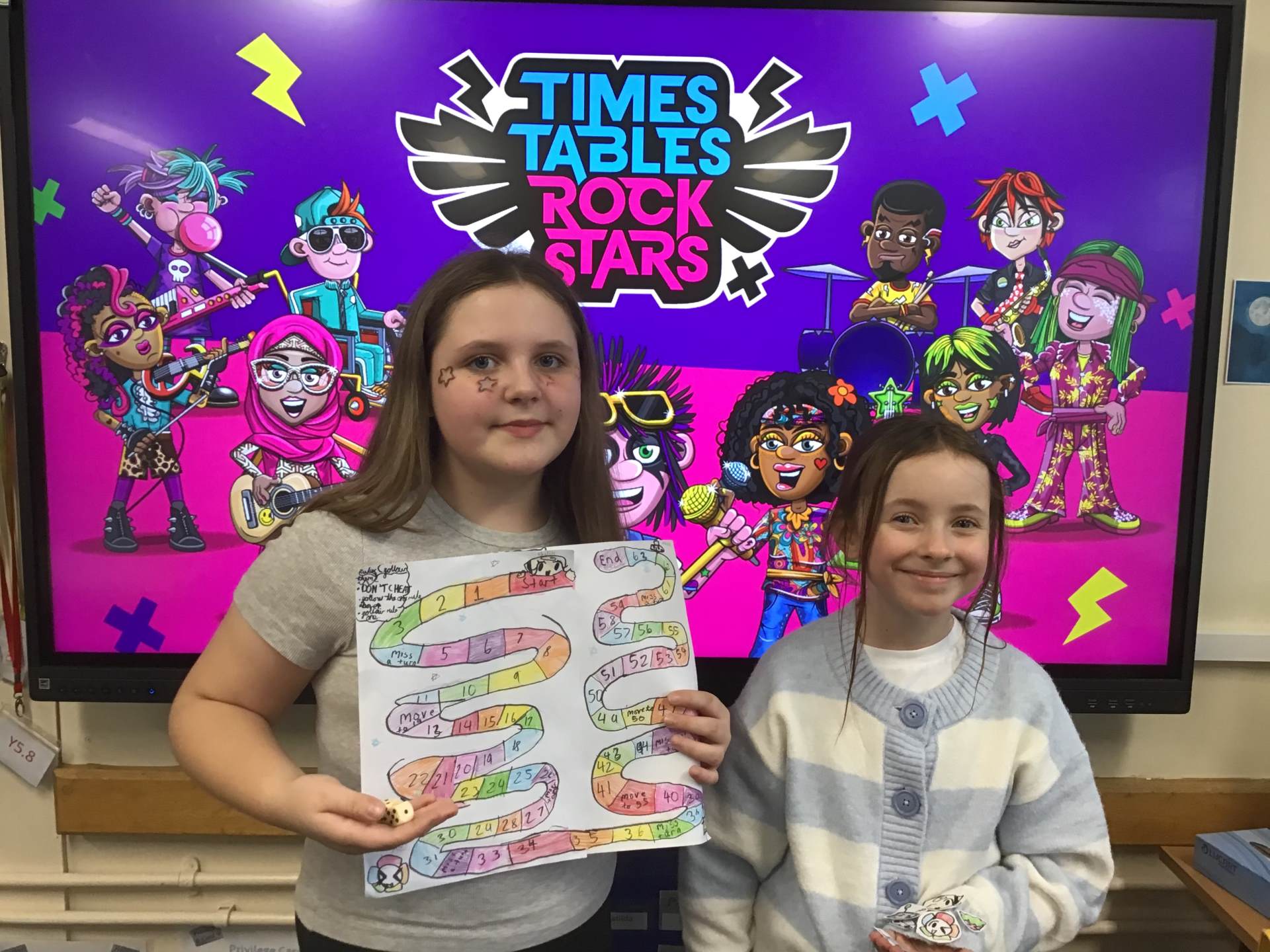
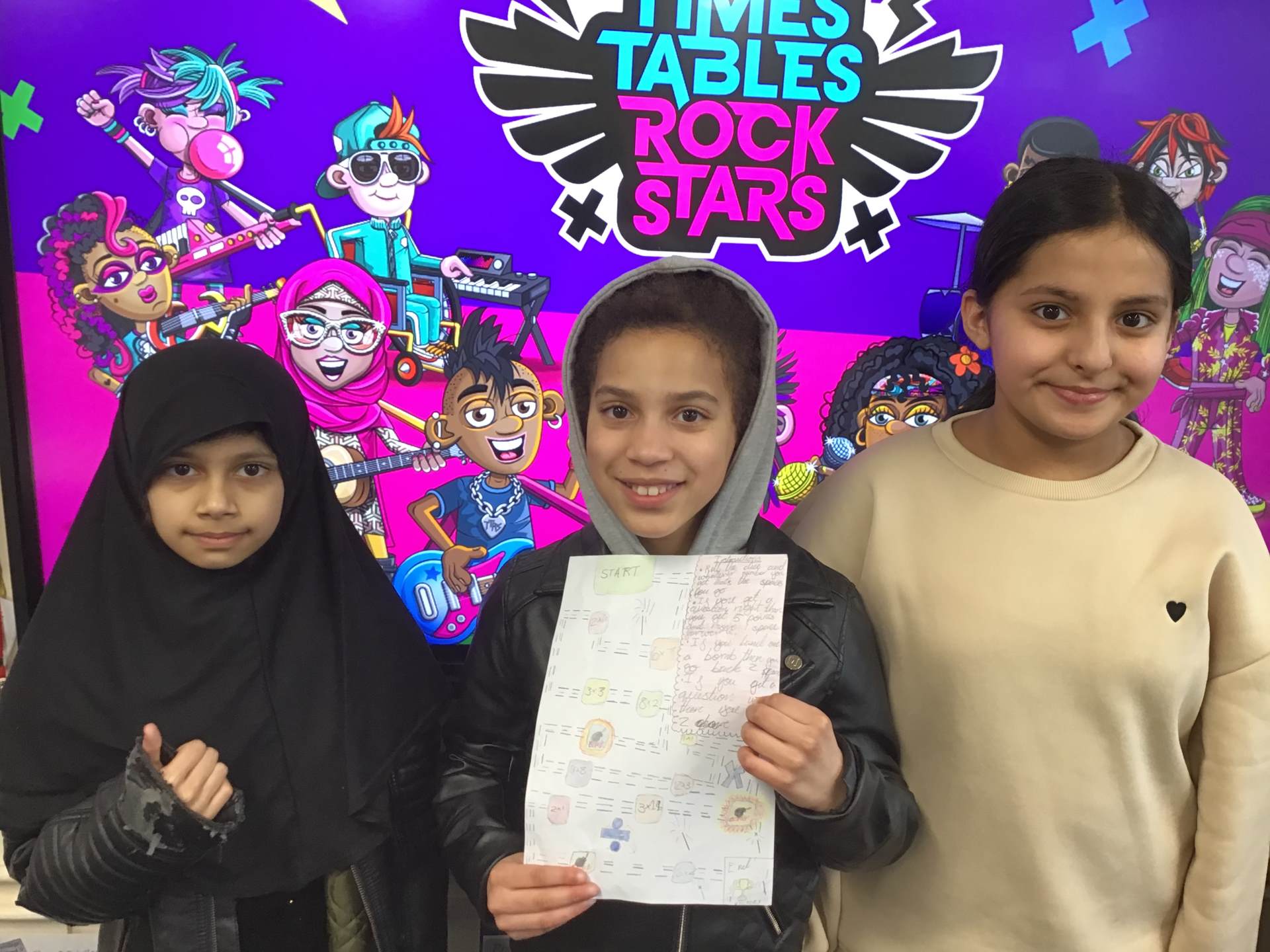
In addition to rapid recall, pupils develop secure understanding of the four written calculation methods through explicit teaching and regular practice. Times Tables Rock Stars (TTRS) is used consistently across the school to support rapid recall of multiplication and division facts, contributing to our strong Multiplication Tables Check (MTC) outcomes, particularly in Year 4.
Teachers primarily use White Rose resources to support planning and delivery, adapting tasks where necessary to meet the needs of their pupils. This ensures consistency in approach while allowing flexibility to respond to assessment and pupil understanding.
Assessment is ongoing and purposeful. Teachers use formative assessment within lessons to identify misconceptions and adapt teaching accordingly. Summative assessments are analysed carefully to inform planning, interventions and pupil progress discussions. Pupils who require additional support receive timely and targeted interventions to ensure they keep up rather than catch up.
The Mathematics subject leader monitors teaching, learning and outcomes through book scrutiny, lesson visits and data analysis. This ensures consistency, high standards and continuous improvement across the school.
Impact
The impact of our Mathematics curriculum is that pupils leave Walmley Junior School as confident, fluent and capable mathematicians, ready to meet the demands of secondary education.
Pupils demonstrate secure knowledge of mathematical concepts and procedures, with the ability to recall and apply facts accurately and efficiently. They can reason mathematically, solve problems independently and explain their thinking using appropriate vocabulary.
Our strong emphasis on daily rapid recall, arithmetic fluency and times tables ensures pupils achieve well in statutory assessments, including the Multiplication Tables Check, and supports high standards across all areas of Mathematics.
End of Key Stage 2 outcomes show that pupils make strong progress from their starting points, with a higher-than-national proportion achieving the expected and higher standards. Most importantly, pupils leave our school with a positive attitude towards Mathematics, resilience when faced with challenge, and the skills needed to succeed in future learning and everyday life.
Progression of Skills
Maths